Table of contents
Wellness used to be something you scheduled, a once-in-a-while spa day or a fitness resolution that faded by February, yet in 2026 it has become an urban signal, as visible as coffee queues and as decisive as rent prices. From Bangkok to Barcelona, neighborhood “vibes” are increasingly shaped by who comes for recovery, how they move through streets, and what they expect to find there. The boom is measurable, but the cultural shift is the real story: wellbeing is no longer a side activity, it is a lifestyle that reorganizes city life.
Wellness is now a local economy
Follow the money, and you end up on the sidewalk. The global wellness economy reached about $6.3 trillion in 2023, according to the Global Wellness Institute, and it is forecast to rise to roughly $9 trillion by 2028; those numbers are so large that they can feel abstract, yet they translate into very concrete street-level changes, from the storefronts that survive to the opening hours that define a district. In many cities, “wellness” spending is no longer confined to luxury hotels, it is dispersed across everyday services such as massage and physiotherapy, boutique gyms, functional medicine clinics, saunas and bathhouses, and the newer wave of recovery businesses built around cold plunges, compression boots, and guided breathwork.
That dispersion matters because it produces a predictable ripple effect. Businesses with recurring clients stabilize foot traffic, landlords respond to the perceived “quality” of tenants, and surrounding retail adapts, adding higher-margin food options, more places to sit, and more late-morning service rather than late-night. In the United States, the Bureau of Labor Statistics tracks “personal care services” as a category that has expanded over the past decade, and in many European capitals the number of registered fitness and wellness operators has also climbed, even as other high-street categories have struggled with e-commerce competition. The result is a street corner dynamic that feels subtle at first, then obvious: fewer empty units, more appointment-based businesses, more customers arriving on foot, and a neighborhood rhythm that tilts toward daylight and routine.
There is also a labor story underneath the vibe. Wellness jobs are often local, service-based, and difficult to offshore, which means they anchor micro-economies, from reception staff to cleaners, from trainers to small-scale product suppliers. And because the industry trades on trust, it can foster clusters: once a district is known for “good hands” and reliable practitioners, adjacent streets benefit, cafés fill with people waiting for appointments, and the area becomes a destination rather than a pass-through. It is a modern twist on an old urban rule: repeated reasons to visit are what make neighborhoods feel alive.
Recovery culture is reshaping daily routines
What changed, exactly? The short answer is that recovery went mainstream, and with it came new habits that cities can’t ignore. The pandemic years pushed people to think about stress, sleep, posture, and immune resilience; then remote and hybrid work made schedules more flexible, allowing mid-morning appointments, longer lunch breaks, and a willingness to travel across town for services that feel “worth it.” At the same time, social media did what it always does, it accelerated a trend, turned private routines into shareable content, and made certain practices, from infrared saunas to lymphatic drainage, part of the public conversation.
This is not only about aesthetics, although aesthetics are a driver. Consumer research groups have repeatedly noted a shift toward “preventive” spending, and wellness has been one of the categories that held up even during inflation spikes, partly because people treat it as maintenance rather than indulgence. The Global Wellness Institute describes wellness tourism as one of the fastest-growing travel segments; in 2023 the organization estimated wellness tourism revenues at roughly $830 billion, with a trajectory that suggests continued growth through the decade. In plain terms, visitors increasingly pick neighborhoods not just for landmarks but for how they can feel there, how they can sleep there, and how easy it is to keep their routines.
That helps explain why certain districts feel suddenly “cleaner,” calmer, and more curated. When a street has more recovery-oriented businesses, it tends to attract customers who value quiet, walkability, and predictability, and those preferences show up in the surrounding ecosystem. You see more alcohol-free options, more high-protein menus, more early openings, and more spaces designed for lingering without chaos. Even the soundscape changes: fewer loud bars, more low-volume playlists, and a general atmosphere that signals “rest” rather than “rush.” Cities have always been shaped by dominant habits, from commuting patterns to nightlife, but recovery culture adds a new layer, it pushes the urban day to start earlier and end a bit earlier, and it rewards neighborhoods that can offer comfort without spectacle.
In places like Bangkok, that logic plays out in a particularly visible way because the city is already a global reference point for massage and bodywork. Travelers arrive expecting high technical standards and good value, and local residents have long treated massage as routine rather than rare, so the market is deep and competitive. For readers looking to understand how specialized services fit into a wider wellness itinerary, maison-ysae.com offers a useful window into the city’s lymphatic massage landscape, including what to look for and how these treatments are positioned within modern self-care.
Street corners tell the real story
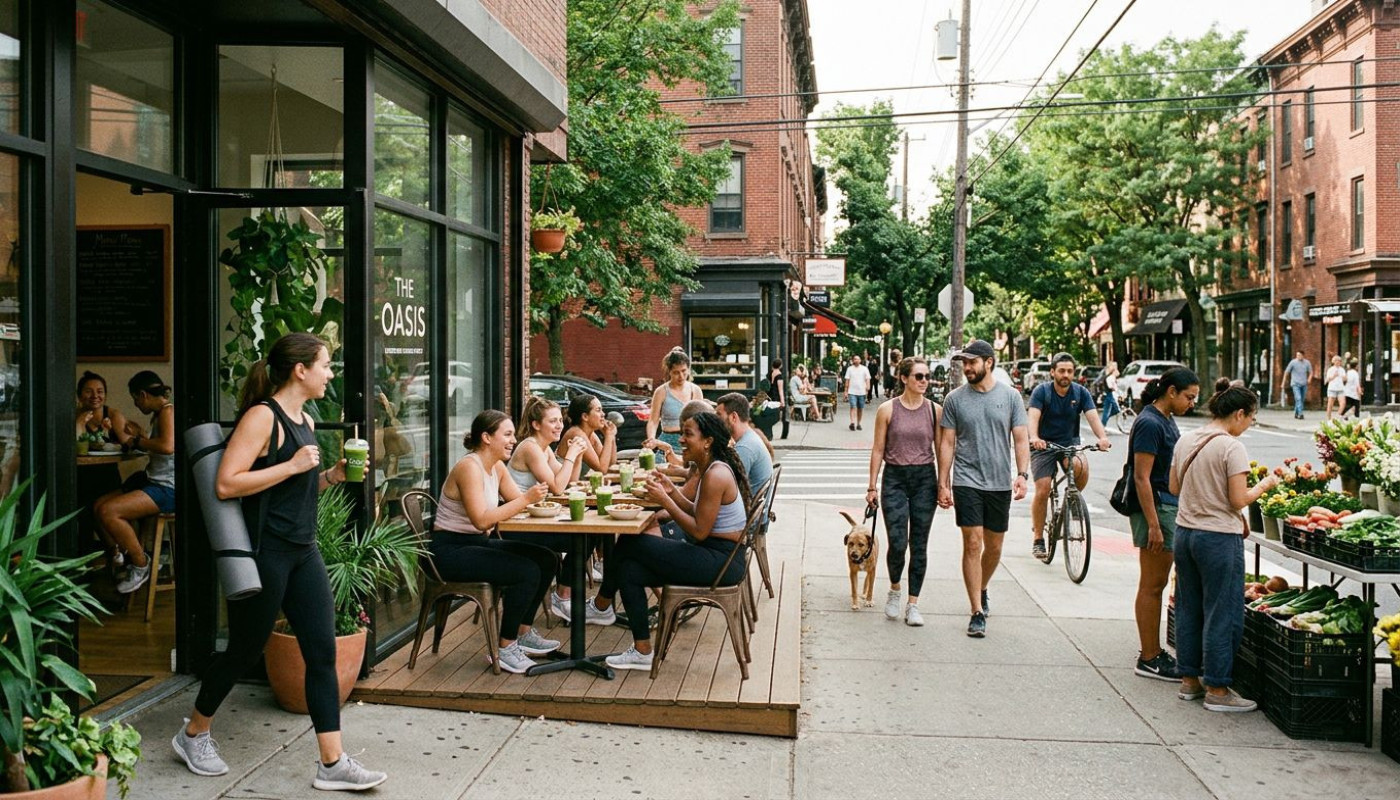
If you want to see how wellness reshapes neighborhood vibes, skip the glossy ads and watch the choreography outside. Who is walking, and at what pace? Are they carrying gym bags at 7 a.m., or are they dressed for dinner at 9 p.m.? Do they queue for pastries, or do they queue for matcha, protein bowls, and electrolyte drinks? The built environment responds to these signals quickly, because small businesses live and die by micro-patterns, and the corner is where those patterns reveal themselves.
In many cities, wellness corridors emerge around transit links and dense residential zones, where repeat customers can stack errands. A pilates studio sits next to a café that can handle laptops, a sports physio opens near a running store, and a small grocery leans into fresh, high-turnover items. It looks like “vibe,” but it is logistics, and the data behind it often shows up in commercial rents and vacancy rates. Even without a single official label, neighborhoods that attract health-oriented spending tend to develop reputations for safety and cleanliness, which can in turn influence property demand. This is not an argument that wellness automatically improves everything; it can also accelerate gentrification dynamics, putting pressure on legacy businesses and long-time residents. But the direction of travel is clear: once wellness becomes a significant share of local spending, it becomes part of the identity a neighborhood sells.
There is also a cultural blending that happens at these corners. Wellness has moved far beyond the stereotypical “spa tourist,” and the clientele is often mixed, locals looking for pain relief sit next to visitors optimizing jet lag, and young professionals book sessions in the same way previous generations booked haircuts. That overlap changes how people interpret public space. A street with visible self-care routines feels different from a street dominated by nightlife cues, and city planners increasingly pay attention to this, because calmer streets reduce conflict between uses. It is not surprising that some municipalities have experimented with wider sidewalks, more shade, and traffic-calming measures in districts that have become pedestrian-heavy for daytime services.
And then there is signage, the overlooked narrator of urban change. The language on storefronts has shifted toward “recovery,” “mobility,” “breath,” “sleep,” and “therapy,” words that imply maintenance rather than transformation. That subtle semantic change matters, because it tells passersby what kind of neighborhood this is, and who it is for. When you see those words repeated block after block, you are not just looking at a trend, you are looking at a new urban promise: come here, and you will feel better.
What it means for travel and residents
Wellness shaping neighborhood vibes sounds like lifestyle journalism, yet it has practical consequences for anyone choosing where to stay, where to live, and how to spend time. For travelers, the implications are immediate: neighborhoods with dense wellness services tend to be easier for maintaining routines, and they often come with a different set of amenities, quieter nights, earlier breakfasts, and more daytime activity. For residents, the trade-offs are sharper, because a “wellness district” can mean better services and safer streets, but also higher rents and a gradual replacement of everyday commerce with appointment-based businesses.
There is a planning question here that cities are only starting to confront. How do you encourage health-promoting services without turning them into a monoculture? The most resilient neighborhoods, historically, are mixed, with places for families, for older residents, for night workers, and for newcomers, and the same principle applies in the wellness era. A district that becomes too narrowly defined can lose spontaneity, and it can push out the very social diversity that makes a city feel real. Some local governments have tried to protect retail variety through zoning, through caps on certain categories, or through subsidies for essential services, but enforcement is uneven, and the market moves faster than policy.
For consumers, the best approach is to treat wellness as part of a broader neighborhood ecosystem, not as a single checkbox. Look for transparent pricing and clear professional standards, because regulation varies widely across countries and even across cities, and ask practical questions about hygiene, qualifications, and contraindications, especially for intensive bodywork. Consider the rhythm of the area, too: is it walkable, is it noisy at night, is it designed for daytime errands, and does it have the kind of food and transit options that make routines sustainable? In the end, “vibe” is simply the felt result of thousands of choices, by businesses, by customers, and by planners, and wellness is now one of the strongest forces shaping those choices.
Booking smart without overpaying
Plan ahead, and your budget will thank you. In many cities, weekday daytime slots are cheaper than evenings and weekends, and booking a few days in advance can secure better availability, especially in high season. Ask about package pricing, and check whether your travel insurance or employer benefits cover certain therapies; some markets also offer resident discounts or seasonal promotions.
On the same subject


